

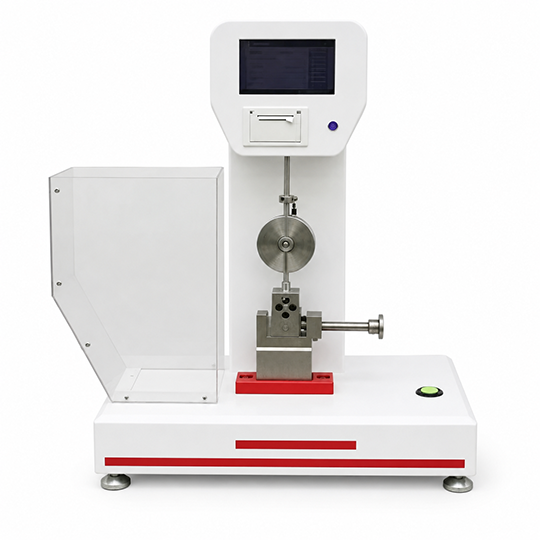
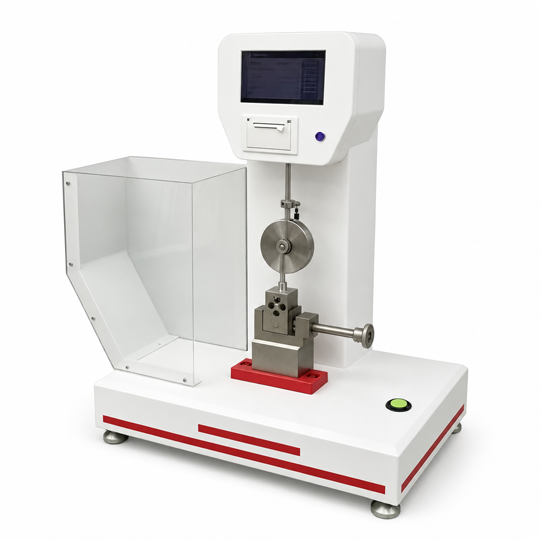
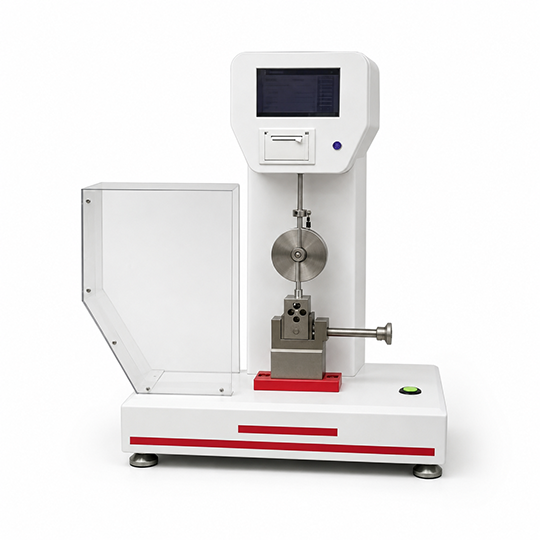
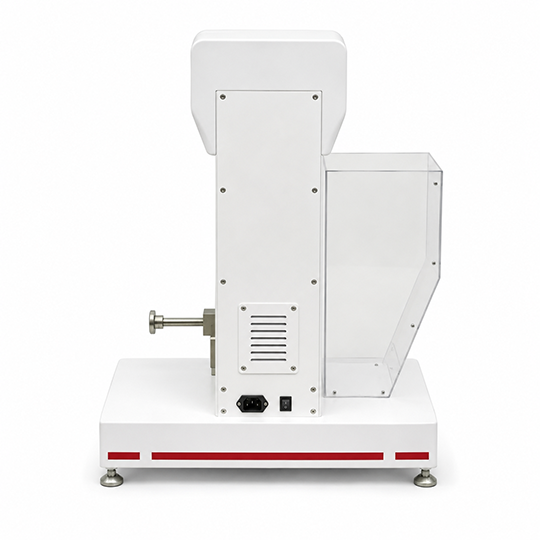
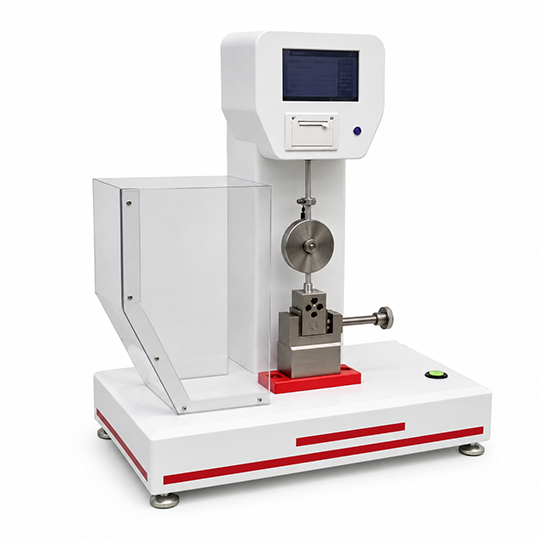
Why Trust The FOLISTECH Izod Impact Tester?
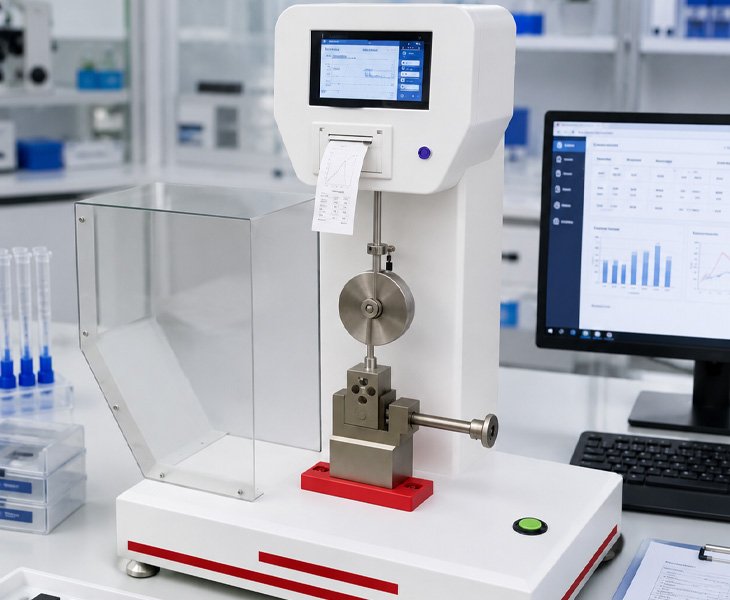
- Designed for Izod impact strength testing of plastics and other non-metallic materials.
- Color touchscreen control makes it easier for your team to operate the tester.
- Automatic calculation and energy-loss correction improve the efficiency of routine testing.
- Micro printer support allows you to print test results directly after measurement.
- PC connection helps you export, edit, and print test data for your records.
- The optional notch-depth measurement connection helps improve the accuracy of specimen data.
Professional Izod Impact Tester For Material Laboratories
When you test rigid plastics, reinforced nylon, fiberglass, ceramics, cast stone, or electrical insulating materials, you need more than a machine that can simply break a specimen. Your laboratory needs repeatable impact results, fewer manual calculation errors, easier record management, and a workflow that new technicians can learn quickly. The FOLISTECH Izod Impact Tester gives you touchscreen control, automatic result calculation, energy-loss correction, PC data export, and printing support, helping your team complete Izod impact strength testing with better consistency and less routine operation pressure.
Our Main Izod Impact Tester Solution
We provide Izod Impact Tester for material laboratories, quality inspection departments, research institutes, colleges, and professional manufacturers.
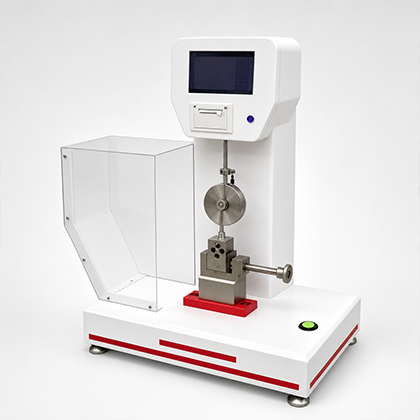
Izod impact tester with touchscreen control, automatic calculation, and printing support.
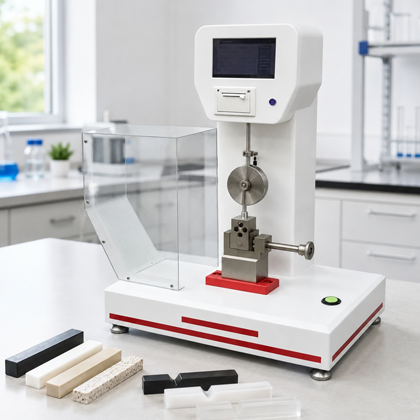
Suitable for rigid plastics, reinforced nylon, fiberglass, ceramics, and insulation materials.
Application For Izod Impact Tester
You can test the impact toughness and Izod impact strength of plastic specimens.
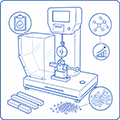
You can evaluate impact resistance for reinforced nylon material development and QC.
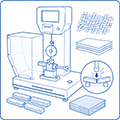
You can use it for impact testing of fiberglass and composite materials.
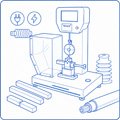
You can test non-metallic insulation materials for quality inspection.
Reduce Manual Errors With An Izod Impact Tester
If your laboratory still relies on manual calculation, handwritten records, or repeated data entry, small mistakes can affect your final impact strength report. With the FOLISTECH Izod Impact Tester, you get automatic energy-loss correction, automatic test result calculation, micro printer output, and PC export support. Your team can reduce repetitive manual work, keep cleaner testing records, and make routine impact toughness testing easier to trace, review, and report.
Why Choose FOLISTECH?
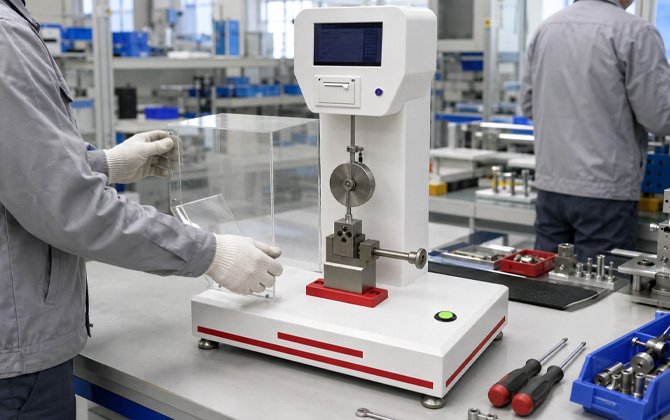
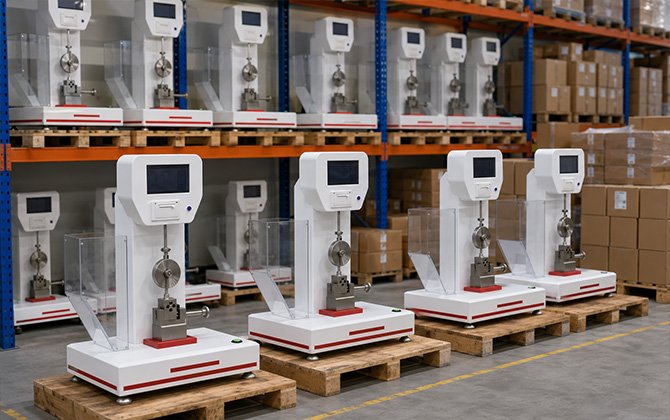
When you choose the FOLISTECH Izod Impact Tester, you do not need to figure out every technical detail alone. Your team may need to match a testing standard, confirm the right impact energy, manage specimen dimensions, train operators, and keep test data organized for QC review. We help you select suitable impact testing equipment based on your material type, specimen size, testing standard, data output needs, and daily operation workflow, so your laboratory can move from purchase to routine testing with fewer uncertainties.
Application Cases For Your Material Impact Testing Workflow
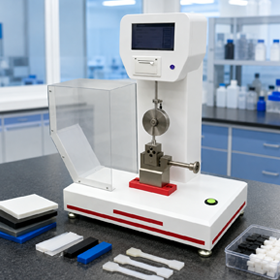
If your laboratory tests rigid plastic specimens every day, your team needs stable impact-energy control, repeatable results, and clear output. Manual calculation and scattered records can slow down your QC workflow. The FOLISTECH Cantilever Impact Testing Machine helps your team perform Izod impact strength testing with automatic calculation, energy-loss correction, and result printing, so you can manage routine material testing with fewer reporting mistakes.
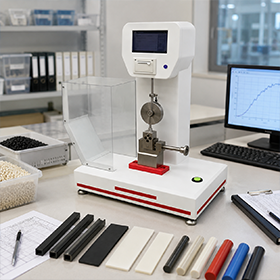
When you test reinforced nylon or electrical insulation materials, specimen dimensions and absorbed impact energy can directly affect your final result. If specimen data is entered inaccurately, your report may lose reliability. With PC connection and optional notch depth measurement support, you can transfer specimen data more accurately and keep better testing records for your QC workflow.

Product Details Tab
- Parameter Table
- Specification
- Specimen Size
- Standard Configuration
| Standard No. | Standard Name |
| GB/T 1843-2008 | Plastics – Determination of Izod Impact Strength |
| ISO 180-1993 | Plastics – Determination of Izod Impact Strength |
| GB/T 2611-2007 | General Technical Requirements for Testing Machines |
| JB/T 8761-1998 | Plastic Cantilever Impact Testing Machine |
| Item | Specification |
| Impact Energy | 2.75 J, 5.5 J |
| Impact Speed | 3.5 m/s |
| Pendulum Pre-lift Angle | 150 deg |
| Distance from Impact Blade to Upper Surface of Clamp | 22 mm +/-0.2 mm |
| Distance to Impact Center | 335 mm |
| Blade Edge Radius | R = 0.8 mm +/-0.2 mm |
| Energy Loss | 1.0 J <0.02 J; 2.75 J <0.03 J; 5.5 J <0.03 J |
| Minimum Resolution | 0.001 J |
| Instrument Dimensions | 700 mm (L) x 350 mm (W) x 850 mm (H) |
| Required Space | 0.4 m front/back; 1.5 m left/right; 1.5 m above |
| Power Supply | 100 VA, 220 VAC, 50 Hz |
The preferred specimen is Type 1.
| Specimen Type | Length L (mm) | Width b (mm) | Thickness h (mm) |
| 1 | 80 +/-2 | 10.0 +/-0.2 | 4 |
| 2 | 63.5 +/-2 | 12.7 +/-0.2 | 12.7 +/-0.2 |
| 3 | 63.5 +/-2 | 12.7 +/-0.2 | 6.4 +/-0.2 |
| 4 | 63.5 +/-2 | 12.7 +/-0.2 | 3.2 +/-0.2 |
| Item | Quantity / Description |
| Main unit | 1 set |
| Impact pendulum | 1 piece, 2.75 J |
| Weights | 1 pair, 5.5 J |
| Fixed clamp | 1 piece |
| Centering template | 1 piece |
| Hex key | 3 mm |
| Power cord | 1 piece |
Customer Feedback On The Izod Impact Tester
We use the FOLISTECH Izod Impact Tester for plastic specimen testing in our quality laboratory. The touchscreen is easy for our technicians to operate, and the automatic calculation function helps us save time.”
Daniel WeberMaterial Testing Supervisor, Germany“The Izod Impact tester is practical for our reinforced nylon impact testing work. We can print results and export data to a PC, which makes record management much easier for our QC process.”
Mariana SilvaQC Engineer, Brazil
You can use it for rigid plastics, reinforced nylon, fiberglass, ceramics, cast stone, electrical insulating materials, and other non-metallic materials.
You can use it for testing based on GB/T 1843-2008, ISO 180-1993, GB/T 2611-2007, and JB/T 8761-1998.
You can use 2.75 J and 5.5 J impact energy configurations.
Yes. You can print test results through the micro printer support, which helps your team keep immediate records after each test.
Yes. You can connect the main unit to a PC to export, edit, and print test data, making your record management easier.
Yes. You can connect a notch depth measuring instrument to transfer specimen dimensions accurately and save the data, reducing errors from manual input.
The preferred specimen is Type 1, with dimensions of 80 +/-2 mm length, 10.0 +/-0.2 mm width, and 4 mm thickness.